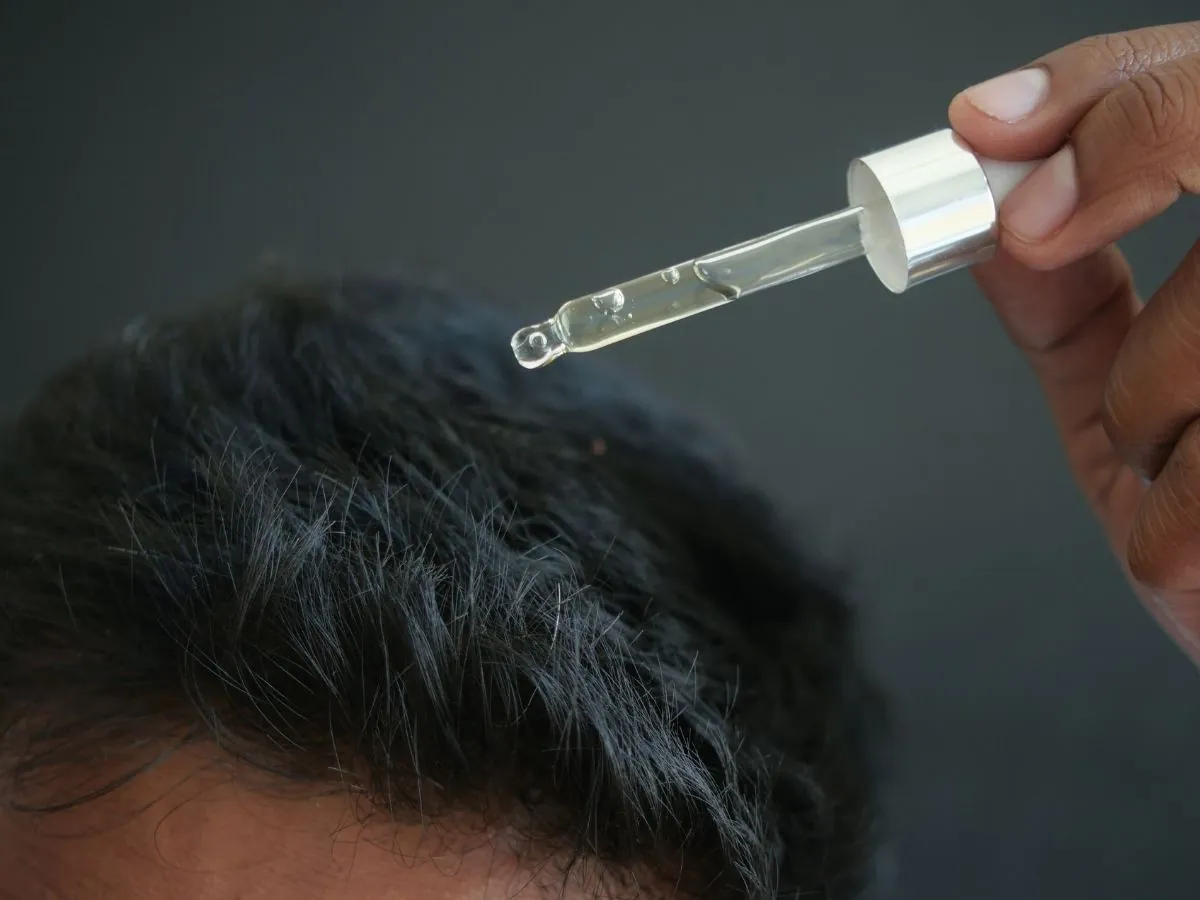
Direct Comparison: Minoxidil Foam vs Liquid
Minoxidil foam and liquid treat hair loss in similar ways, but they differ in texture, ingredients, and daily use. These differences affect comfort, absorption, and how easily people stick to treatment during their hair regrowth journey.
Mechanism of Action
Topical minoxidil works by supporting the hair growth cycle at the scalp level. It helps move hair follicles from the resting phase into the growth phase. This process supports thicker and longer-lasting hair regrowth over time.
Both minoxidil foam and minoxidil liquid act the same once they reach the scalp. Clinical studies show no meaningful difference in how they stimulate hair follicles. The active drug remains identical in both forms, whether using 2% minoxidil or 5% minoxidil.
Results depend more on steady use than on formulation. People who apply minoxidil as directed often see changes after several months, regardless of liquid vs foam.
The main difference lies in the base formula. Minoxidil liquid uses propylene glycol, alcohol, and water. This mix helps dissolve minoxidil but can irritate sensitive skin.
Minoxidil foam removes propylene glycol and uses a lighter foam formulation instead. This change lowers the risk of itching and redness for many users.
Key formulation differences
Feature | Foam Formulation | Liquid Formulation |
|---|
Propylene glycol | No | Yes |
Texture | Light foam | Thin liquid |
Dry time | Faster | Slower |
Residue | Minimal | Possible |
These differences matter most for people with sensitive scalps or prior skin reactions.
Ease of Application and User Experience
Application methods shape daily habits. Foam spreads easily across thinning areas and dries quickly. Many users find it easier to apply in the morning without dripping.
Liquid minoxidil uses a dropper for direct scalp contact. This method works well for long or dense hair but can feel messy. The liquid may run if applied too quickly.
User preference often depends on hair length and routine. According to a detailed breakdown of minoxidil foam vs liquid application differences, foam tends to score higher for comfort, while liquid offers more precise placement.
Effectiveness and Clinical Outcomes
Clinical studies show similar hair regrowth results for both formulations. A head-to-head trial found near-equal increases in hair count after consistent use. The difference measured was not clinically meaningful.
Both minoxidil 5% foam and liquid improve outcomes more than lower strengths. Absorption varies slightly, but it does not change long-term results for most users.
Dermatology reviews, including comparisons outlined in clinical guidance on minoxidil foam and liquid effectiveness, confirm that formulation choice does not determine success. Consistency, dosage, and time matter more than the delivery form.
Choosing the Right Option for Your Needs
The choice between foam and liquid depends on skin response, daily habits, and the area being treated. Cost, access, and long-term use also shape what works best.
Side Effects and Scalp Sensitivity
Scalp reactions matter most for people with a sensitive scalp or a history of skin irritation. Liquid minoxidil often contains propylene glycol, which can trigger scalp itching, redness, or contact dermatitis in some users. In rare cases, this shows up as allergic contact dermatitis.
Foam formulas avoid propylene glycol. This lowers the risk of scalp irritation and burning. Many people with scalp sensitivity tolerate foam better, especially during early use.
A quick comparison helps:
Issue | Foam | Liquid |
|---|
Scalp irritation | Less common | More common |
Greasy residue | Minimal | More likely |
Drying time | Faster | Slower |
Both forms can cause mild shedding at first. This often relates to the hair cycle, not damage. Reports summarized by dermatology reviewers show similar safety profiles, with foam causing fewer skin complaints, as noted in this minoxidil foam vs liquid comparison.
Cost, Availability, and Long-Term Use
Liquid minoxidil usually costs less and comes in larger bottles. Many stores sell generic versions of Rogaine liquid, which helps with long-term budgets. Foam costs more per month but saves time during application.
Both forms stay available over the counter in 2% and 5% strengths. Consistent use matters more than format in any hair regrowth treatment. Missing doses reduces results.
Long-term use often pairs minoxidil with finasteride for male pattern baldness or androgenetic alopecia. Price comparisons from major retailers show liquid as the cheaper option, while foam ranks higher for ease of use, as outlined in this foam vs liquid minoxidil cost and use guide.
Special Considerations: Beard Growth, Hair Density, and Gender Differences
Application area changes the decision. For minoxidil for beard growth, liquid allows precise placement on small areas. Some users accept mild dryness in exchange for control. Foam spreads faster and works better for larger patches of hair thinning.
Hair type also matters. People with thick hair or high hair density may reach the scalp more easily with liquid. Foam suits short hair and diffuse loss.
Studies show similar results for male pattern hair loss and female pattern hair loss. Women often choose foam to reduce irritation and unwanted facial hair from runoff. Clinical reviews report near-equal results for minoxidil for hair regrowth, regardless of form, as explained in this expert breakdown of foam vs liquid minoxidil.
Systemic absorption stays low for both when used as directed. Following a steady hair care regimen improves tolerance and results.